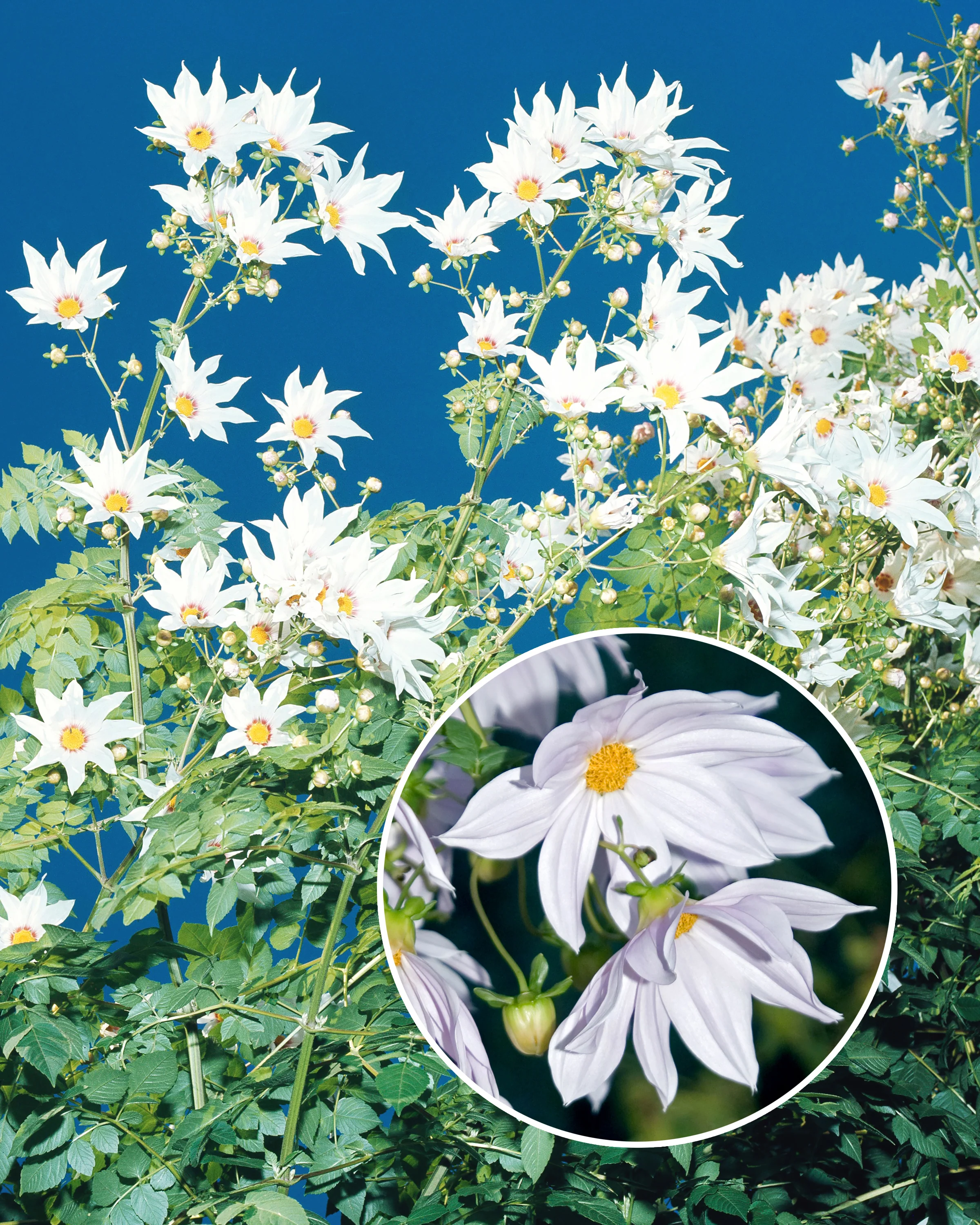
Dahlia imperialis 'Alba'
If you're looking for something structural, exotic and exciting to grow, you must give Dahlia imperialis 'Alba' a try. Unlike the familiar blousy dahlias which are commonly seen flowering through summer, this tree-like version (also known as bell tree dahlia) is truly something else. Native to Mexico and Central America, it's better adapted to cope with heat. In a warm climate, this white variety can grow up to 8m tall with woody, bamboo-like stems! In a cooler climate, Dahlia imperialis 'Alba' typically reaches a less daunting size of 2.5m and will die back for winter, as with most dahlias. This architectural plant has fantastic foliage through the summer season and, if it's a long, hot summer, it'll treat you to an extra special, late-season display of starry white blooms in October.
Dahlia imperialis 'Alba' is not frost hardy so you will need to plant the tubers in frost-free conditions in spring and plant outside after risk of frost has passed. After the first frost in autumn, it'll be necessary lift and store the tubers for winter in areas where winter temperatures fall below zero. This white bell tree dahlia needs a moist but well-drained soil and a sunny spot in the garden. You can increase its chances of flowering in autumn by growing it in a conservatory or heated greenhouse in spring, which will get it off to a speedy start!
More Images
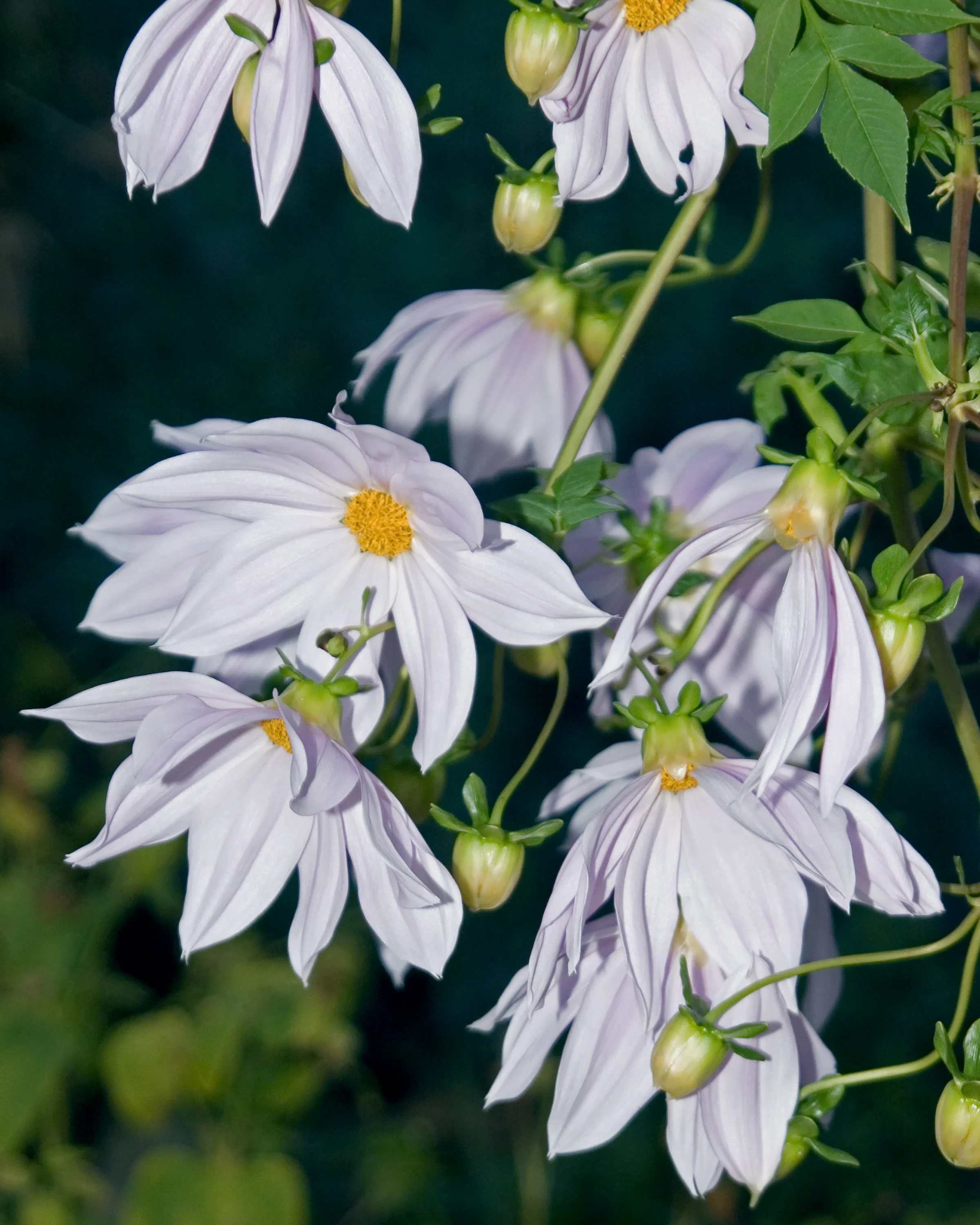
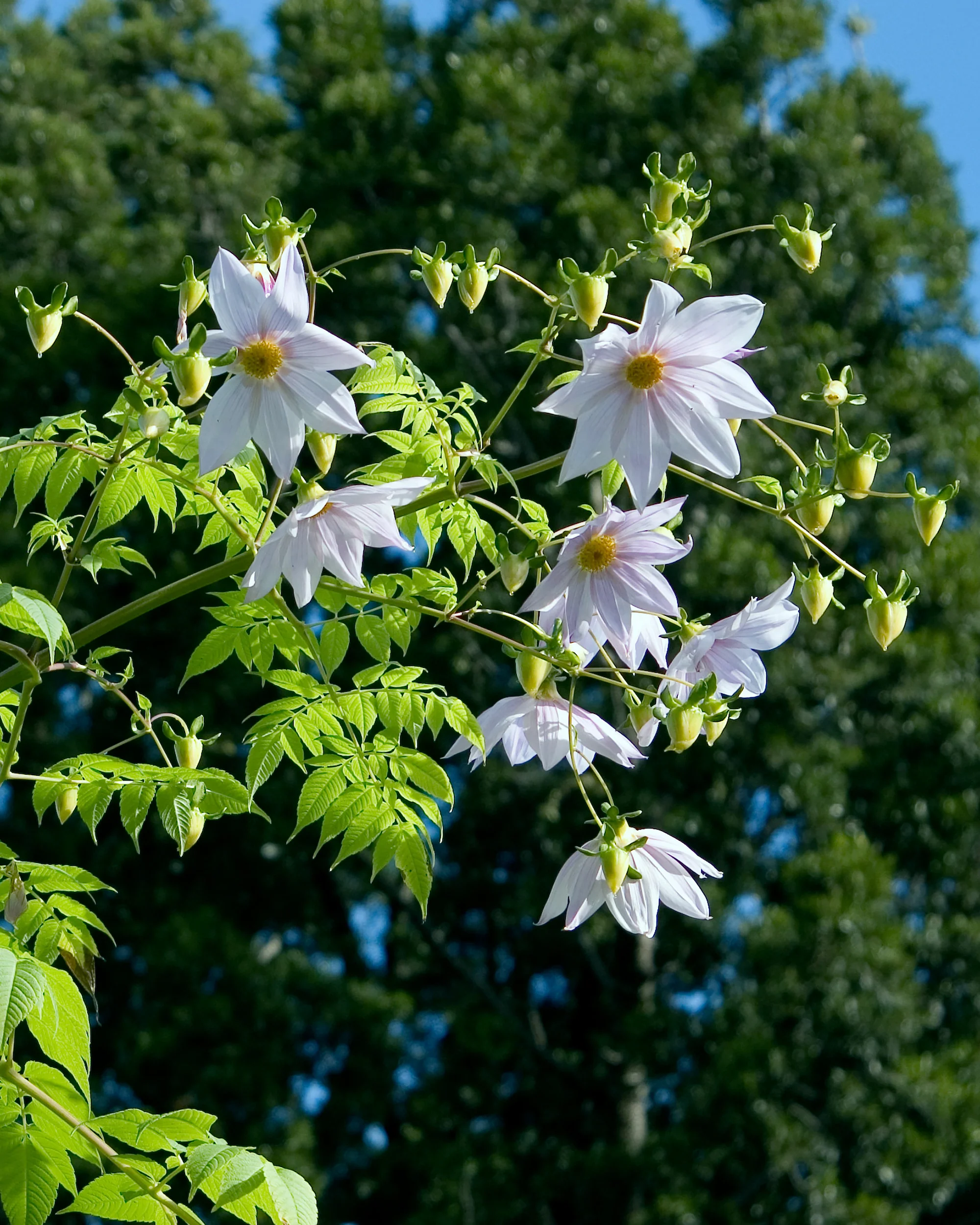
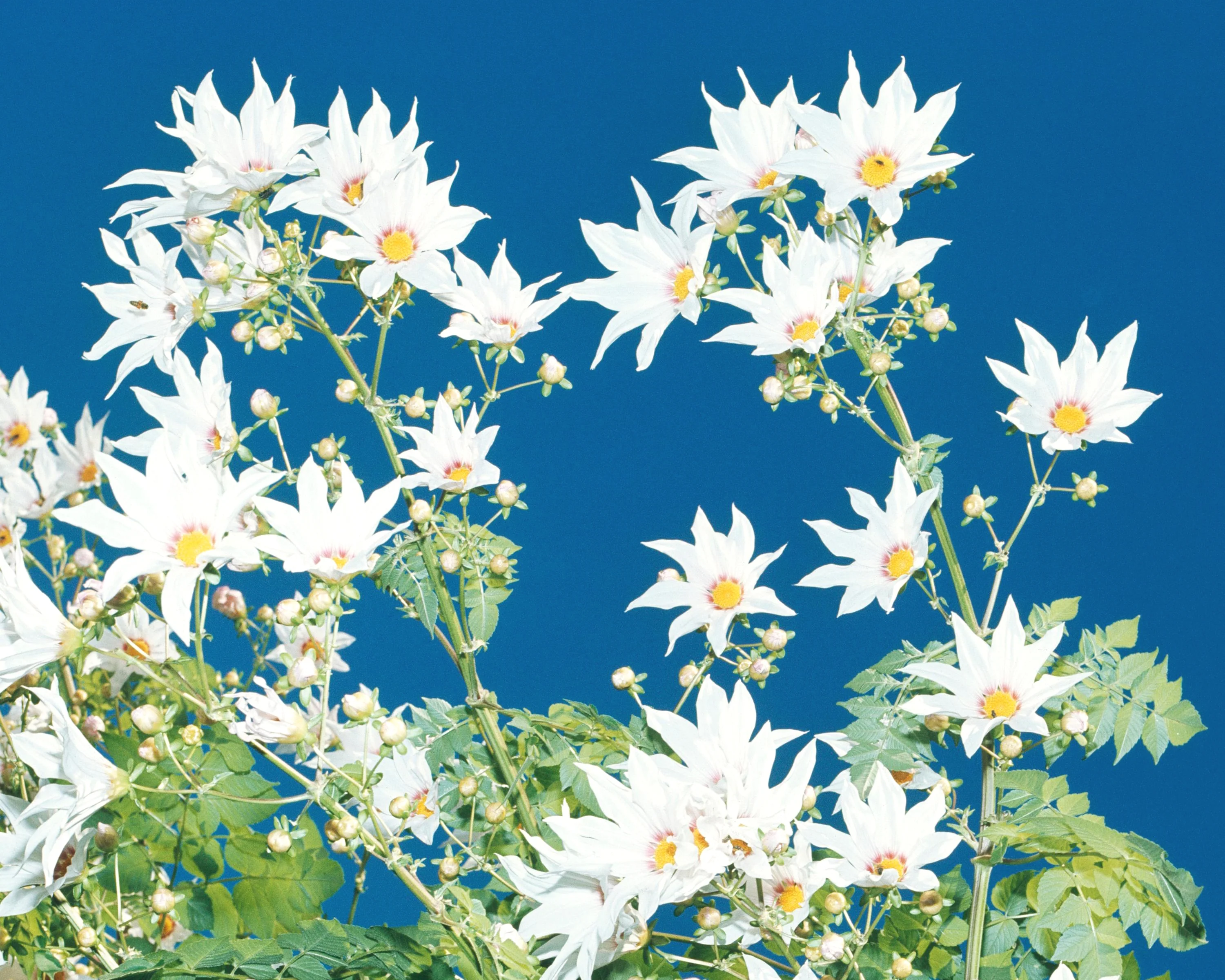
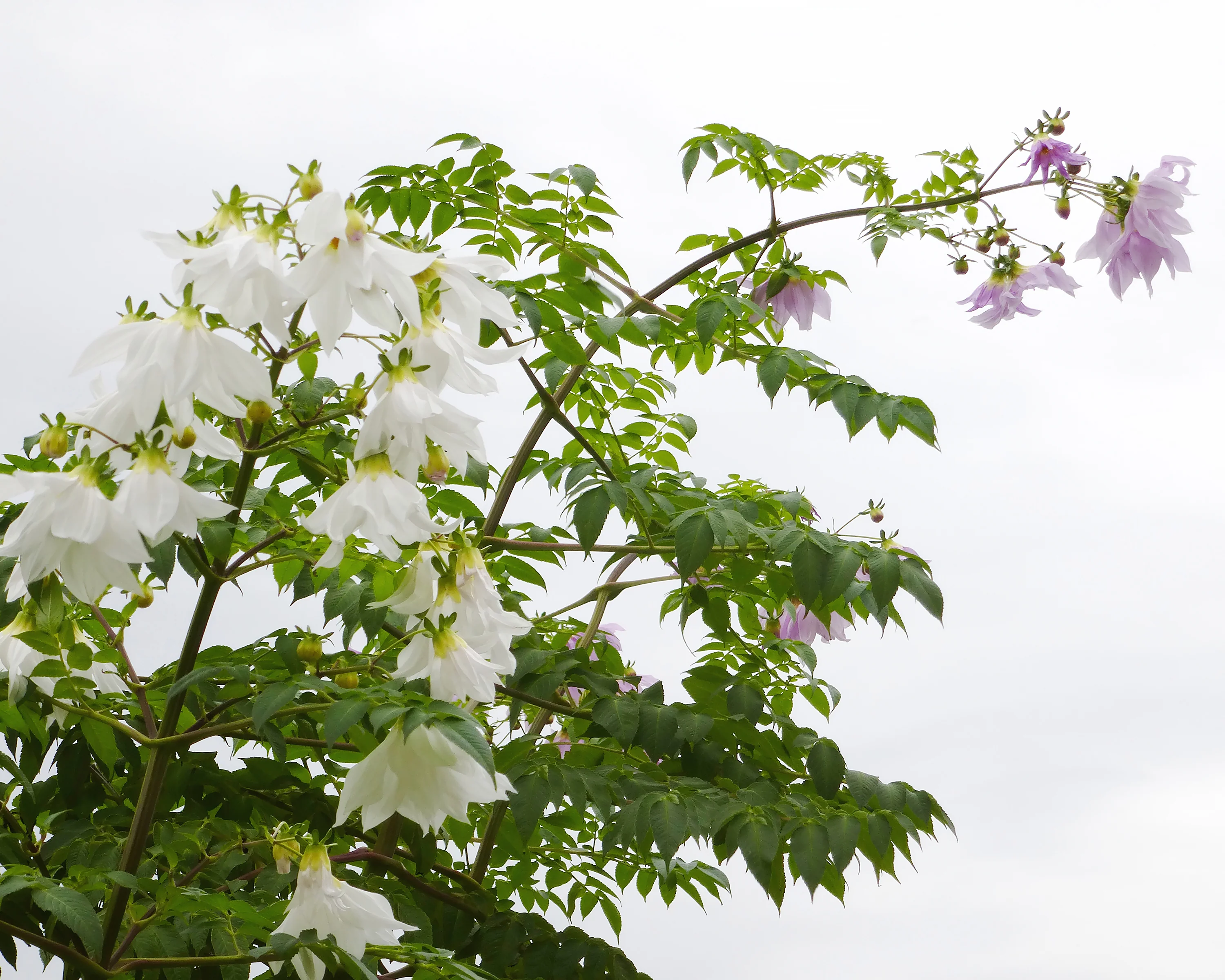
Dahlia imperialis 'Alba'
If you're looking for something structural, exotic and exciting to grow, you must give Dahlia imperialis 'Alba' a try. Unlike the familiar blousy dahlias which are commonly seen flowering through summer, this tree-like version (also known as bell tree dahlia) is truly something else. Native to Mexico and Central America, it's better adapted to cope with heat. In a warm climate, this white variety can grow up to 8m tall with woody, bamboo-like stems! In a cooler climate, Dahlia imperialis 'Alba' typically reaches a less daunting size of 2.5m and will die back for winter, as with most dahlias. This architectural plant has fantastic foliage through the summer season and, if it's a long, hot summer, it'll treat you to an extra special, late-season display of starry white blooms in October.
Dahlia imperialis 'Alba' is not frost hardy so you will need to plant the tubers in frost-free conditions in spring and plant outside after risk of frost has passed. After the first frost in autumn, it'll be necessary lift and store the tubers for winter in areas where winter temperatures fall below zero. This white bell tree dahlia needs a moist but well-drained soil and a sunny spot in the garden. You can increase its chances of flowering in autumn by growing it in a conservatory or heated greenhouse in spring, which will get it off to a speedy start!
Product Information
Product Information
Shipping & Returns
Shipping & Returns
Description
If you're looking for something structural, exotic and exciting to grow, you must give Dahlia imperialis 'Alba' a try. Unlike the familiar blousy dahlias which are commonly seen flowering through summer, this tree-like version (also known as bell tree dahlia) is truly something else. Native to Mexico and Central America, it's better adapted to cope with heat. In a warm climate, this white variety can grow up to 8m tall with woody, bamboo-like stems! In a cooler climate, Dahlia imperialis 'Alba' typically reaches a less daunting size of 2.5m and will die back for winter, as with most dahlias. This architectural plant has fantastic foliage through the summer season and, if it's a long, hot summer, it'll treat you to an extra special, late-season display of starry white blooms in October.
Dahlia imperialis 'Alba' is not frost hardy so you will need to plant the tubers in frost-free conditions in spring and plant outside after risk of frost has passed. After the first frost in autumn, it'll be necessary lift and store the tubers for winter in areas where winter temperatures fall below zero. This white bell tree dahlia needs a moist but well-drained soil and a sunny spot in the garden. You can increase its chances of flowering in autumn by growing it in a conservatory or heated greenhouse in spring, which will get it off to a speedy start!